2013 Coastal Art & Poetry Contest Winners

The California Coastal commission recently posted the winners of their annual Coastal Art & Poetry Contest. We post a lot of serious issues here on the blog and sometimes the perspective of a child says a lot more than a conservationist, scientist or politician can convey on a subject.

It is amazing to think that this pelican drawing was done by a first grade student!

Pelican

Chloe S. Park 1st grade, Encino CA

One of the winning entries was a poem from Isaac Goldstein, an 8th Grade student from Ventura CA, talking about our California sea otters and the removal of the “No-Otter” Zone.

The Otter 

Once upon a sunlit ocean,
Otters and kelp swayed in motion,
Over herring, rockfish, and much more,
All along California’s shore.

But otters were stalked where they dwelt.
Hunted for their lustrous pelt.
Then told to move to San Nicolas.
Giving otters directions is ridiculous.

But now otters have protection.
Even after Point Conception,
No longer is there a “no otter zone,”
Keeping them from their historic home.

When otters were gone, sea urchins would thrive,
Which kept the kelp from staying alive.
Urchins eat the kelp ocean lawn,
When roots are eaten, the kelp is gone.

Herring and rockfish lost habitat,
They lost their nurseries just like that.
With otters’ return, sea urchins will fade,
Letting spawning fish be unafraid.

Otters can now roam an 840 mile coast.
Otter skins no longer can hunters boast.
Otter relocation will no longer stand.
No longer from waters are otters banned.

Isaac Goldstein
8th grade, Ventura

Posted in Kid Art, Uncategorized | Tagged , , | 1 Comment

The ‘No-Otter Zone’ is no more

FWS terminates southern sea otter translocation program, fulfills 2009 legal settlement with The Otter Project and Environmental Defense Center.

Head-down-southToday, the U.S. Fish and Wildlife Service (FWS) published a final rule officially ending the ‘no-otter zone’ encompassing nearly all of the sea otter’s natural range in southern California.  In 2009, the Environmental Defense Center (EDC) sued the FWS on behalf of The Otter Project and itself, challenging FWS’ decades-long delay in making a required decision on whether or not to terminate the ‘Southern Sea Otter Translocation Program’–an outdated rule from 1987 prohibiting threatened southern sea otters from California waters south of Point Conception (Santa Barbara County to the Mexican border).  Allowing otters to once again inhabit southern California waters is considered critical to the recovery of the species.  Under a 2010 legal settlement reached by The Otter Project and EDC with the FWS, the agency was required to make a final decision on the fate of the program by December 2012.  Publication of the final rule is the last step of the settlement between the FWS and the two environmental groups.

“Trying to tell a marine mammal to stay on one side of an imaginary line across the water was a dumb idea,” said Steve Shimek, Executive Director of The Otter Project.  “This rule will not only protect sea otters from harm, but because of the otters’ critical role in the environment, it will also help restore our local ocean ecosystem.”

“Southern sea otters have been largely absent from their historic southern California habitat for far too long,” stated Brian Segee, EDC Staff Attorney and lead attorney in the litigation and subsequent settlement.  “This decision is a critical step in efforts to recover southern sea otters, by formally allowing this charismatic and intelligent species to naturally return to waters south of Point Conception.”

Under the decision, sea otters are now legally free to float the sunny southern California waters without the threat of being trapped and ‘deported’ to northern California.  Sea otters in southern California will have the same protections under the Endangered Species Act (ESA) and Marine Mammal Protection Act (MMPA) as otters to the north, including being protected from harm from any new development plans that could impact their recovery.

The southern sea otter population numbers around 2,800 in a range that once supported 12,000 to 16,000 sea otters and is listed as ‘threatened’ under the ESA and ’depleted’ under the MMPA.  Sea otter recovery is impossible with the ‘no-otter zone’ in place.

Beginning in 1987, when the ‘no-otter zone’ was established, the FWS moved 140 southern sea otters to San Nicolas Island, the most remote of California’s Channel Islands, in an attempt to establish a reserve population and protect the small and struggling mainland population from a catastrophic event, such as an oil spill.  Shellfish fishermen, the offshore oil industry, and the Navy objected to the plan and as a result the ‘no-otter zone’ (officially called the ‘management zone’) was established.  Unfortunately, the relocation plan failed immediately when all but about 11 of the 140 otters swam away from San Nicolas Island and back to their home waters or perished.  In spite of the failure, the ‘no-otter zone’ stayed in place and wandering otters were trapped and deported for many years.

The mainland population began to expand its range into 1995 and in 1998 152 otters swam nearly en masse across the line.  Fishermen sued the FWS, demanding the otters be trapped and removed.  That lawsuit failed.  In 2001 the FWS declared that it would no longer move otters out of the zone but left the lower level of protection of sea otters in the zone in place.  The failure of the FWS to protect the otters in this area led to the lawsuit filed by The Otter Project and EDC.

 ###

revisedtoplogo_2c-small1.jpgThe Otter Project protects our watersheds and coastal oceans for the benefit of California sea otters and humans through science-based policy and advocacy. Founded in 1998, The Otter Project has worked to improve near shore ocean health and resolve the barriers to sea otter recovery.  Learn more about The Otter Project at www.otterproject.org.

Environmental Defense CenterThe Environmental Defense Center, a non-profit law firm, protects and enhances the local environment through education, advocacy, and legal action and works primarily within Santa Barbara, Ventura, and San Luis Obispo counties.  Since 1977, EDC has empowered community based organizations to advance environmental protection.  Program areas include protecting coast and ocean resources, open spaces and wildlife, and human and environmental health.  Learn more about EDC at www.EnvironmentalDefenseCenter.org.

Posted in California, No Otter Zone | Leave a comment

Sea Otters Sue State Water Resources Control Board

Lawsuit alleges delay of Agricultural Regulations is Illegal

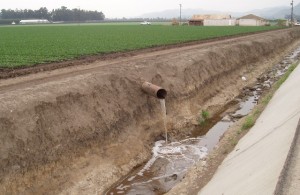
(Monterey) 11/30/12, The Otter Project together with Santa Barbara Channelkeeper, San Luis Obispo Coastkeeper, and California Sportfishing Protection Alliance, sued the State Water Resources Control Board (SWRCB) for delaying regulations meant to protect the public, the environment, and sea otters.

In March of this year the Regional Water Quality Control Board unanimously passed progressive new regulations (the Conditional Waiver of Waste Discharge Requirements for Discharges from Irrigated Agriculture; also known as the Ag Order or Ag Waiver) to protect the public and the environment from agricultural pollution.  The regulations included certain monitoring and reporting requirements that are essential to be consistent with State Law.  State law requires:

“Monitoring requirements shall be designed to support the development and implementation of the waiver program, including, but not limited to, verifying the adequacy and effectiveness of the waiver’s conditions… Monitoring results shall be made available to the public.”

In September the State Water Resources Control Board issued a “stay” delaying the implementation of various parts of the RWQCB’s new regulations.  Specifically, the State Board “stayed” the Regional Board’s requirement 44g:

44. By October 1, 2012, Dischargers must develop a farm water quality management plan (Farm Plan), or update the Farm Plan as necessary, and implement it to achieve compliance with this Order. Farm Plans must be kept current, kept on the farm, and a current copy must be made available to Central Coast Water Board staff, upon request. At a minimum, Farm Plans must include:

g. Description and results of methods used to verify practice effectiveness and compliance with this Order (e.g., water quality sampling, discharge characterization, reductions in pollutant loading).

“The State Water Resources Control Board cannot deliberately choose to ignore the requirements of state law, and effectiveness monitoring and reporting is clearly required by state law,” said Steve Shimek, executive director of The Otter Project.  “To ignore public monitoring and reporting requirements is inviting the fox into the henhouse; the regulatory agencies and public will have no idea if growers are doing anything to control their pollution.”

Central Coast surface and ground waters are some of the most polluted in the State according to the State Water Resources Control Board.[i]  Fifty-six percent of Central Coast monitoring sites indicate the water is “toxic” and 22-percent of sites are “highly toxic.”  A 2012 report to the California Legislature found that “[I]n California’s Tulare Lake Basin and Salinas Valley, roughly 254,000 people are currently at risk for nitrate contamination of their drinking water” and “over 1.3 million people are financially susceptible because nitrate in raw source water exceeds the MCL [maximum contaminant level], requiring actions by drinking water systems.”[ii]  By far, the greatest contributor to the contamination is irrigated agriculture.

“Nearly all of the streams that exhibit high levels of nutrient contamination and toxicity in southern Santa Barbara County are in areas downstream of irrigated agriculture,” said Ben Pitterle, Santa Barbara Channelkeeper’s Watershed Programs Director.  “The problem is severe and pervasive, and the basic monitoring requirements in question are elemental to ensuring that improvements are made.”

San Luis Obispo Coastkeeper Gordon Hensley commented “the single provision we have challenged is simply necessary to demonstrate whether the conditions required of irrigated ag operations work.”

In recent years dozens of sea otters have washed ashore dead, killed by the toxic blue-green algae, microcystis; microcystis blooms in nutrient enriched waters.  The regulations passed by the RWQCB would have taken steps to control agricultural nutrient pollution.  In addition, sea otters carry huge burdens of the agricultural legacy pesticide DDT.  The regulations would have slowed the transport of DDT into the ocean.

For more information contact:

Steve Shimek, The Otter Project, (831) 646-8837 (work) or exec@otterproject.org

Gordon Hensley, San Luis Obispo Coastkeeper, (805) 781-9932, coastkeeper@epicenteronline.org

Ben Pitterle, Santa Barbara Channelkeeper,  (805) 563-3377 ext. 3, ben@sbck.org

Bill Jennings, CA Sportfishing Protection Alliance, (209) 464-5067, deltakeep@me.com

For more information about pollutions issues and sea otters, visit The Otter Project’s website at www.otterproject.org .

###

Posted in California, Water Quality | Tagged , | Leave a comment

Otters Win! Seismic testing near Diablo Canyon defeated.

The Otter Project’s Executive Director and Founder captures hearts and minds with a picture we call ‘upright otter’. Palpable ‘oooohs’ and ‘aaaahs’ could be heard throughout the room.

Late yesterday (11/14) the California Coastal Commission denied PG&E’s application to conduct high-energy seismic testing within Estero Bay and in the heart of the sea otter’s range. PG&E said the testing was needed to assess the potential magnitude of an earthquake at PG&E’s Diablo Canyon Nuclear Power Plant. Studies indicated that 62 otters or more could have been harmed or killed by the tests in addition to harbor porpoise, dolphins, whales, fishes and more. The nexus between nuclear safety and the environment required thoughtful consideration and study by all stakeholders. Should sea otters stand (paddle!) in the way of public safety?

The Otter Project was part of a small group of environmental activists that also included the Sierra Club, NRDC, Surfrider, and Coastal Advocates. The small but powerful environmental caucus was supported by a myriad of other groups and by literally hundreds of activists rallied by Surfrider, Ocean Conservancy, Greenpeace, and the Chumash Tribe.

The environmental perspective was 1) nuclear safety is critically important and we need to know if the plant is safe; 2) alternative and less destructive technologies are available to gather the same information; 3) PG&E has not analyzed the low energy data they have already acquired to determine if the high-energy data is even needed and; 4) PG&E has stated that no matter what the result, they believe the plant is adequately constructed and will make no changes.

During its presentation to the Coastal Commission The Otter Project projected pictures of sea otters eliciting loud “ohhh” and “ahhhh” sounds from the crowd and Commissioners; the lead PG&E representative was overheard saying to his lawyer, “We just lost.”
After eight hours of testimony and deliberation the California Coastal Commission voted unanimously to not allow the tests to move forward. The tests would have cost PG&E ratepayers $64 million.

With PG&E stating that they would not make any changes no matter what the tests showed, it is clear we are just as safe and further ahead with 62 sea otters left alive and paddling.

###

Follow the public reaction to the news on our facebook page.

Posted in California | Tagged , , , | Leave a comment

What role do sea otters play in combatting Climate Change?

kelp forest photo by chris howard (creative commons)

Yes, you read that right. Climate Change. Last week, I read about a new study by two UC Santa Cruz researchers that suggests that sea otters undoubtedly influence the carbon cycle, CO2 storage, by limiting sea urchin populations which allows kelp forests to thrive. The paper was published online in Frontiers in Ecology and the Environment by lead authors UC Santa Cruz professors Chris Wilmers and James Estes. The results of the study indicate that kelp absorbs as much as 12 times the amount of CO2 from the atmosphere with a thriving sea otter population.

The UCSC researchers and their co-authors combined 40 years of data on otters and kelp bloom from Vancouver Island to the western edge of Alaska’s Aleutian Islands. By comparing kelp density with otters and kelp density without otters, they found that sea otters have a positive indirect effect on kelp biomass by keeping sea urchin populations in check. Without sea otters, sea urchin populations explode and decimate large areas of kelp beds resulting in urchin barrens.

Even though kelp is particularly efficient at sequestering CO2 from the atmosphere, scientists have assumed that kelp forests weren’t a significant factor in reduction of the amount of carbon in the atmosphere. They were surprised to discover that the effect of sea otter’s maintaining healthy kelp forests represents a 4.4- to 8.7 megaton increase in carbon storage. The economic value of the stored carbon on the European Carbon Exchange in 2012 prices is estimated to be between $205 to $408 million US dollars.

Given the global scale of climate change, Jeffrey Dukes of the Purdue Climate Change research Center stated that the impact of sea otters is “relatively inconsequential in terms of the big picture of climate change, [but it’s] an interesting study identifying how dramatically a predator can alter the cycling of carbon in an ecosystem” (National Geographic News, Kate Andries).

The researchers acknowledge that otters only play a minor role but their study illustrates that animals worldwide can influence the carbon cycle and might actually have a large impact on reduction of CO2 in the atmosphere.

It is well known that sea otters play a significant role in the nearshore marine ecosystem. As a keystone species[i] they maintain local biodiversity by controlling populations of other species, such as sea urchins, that would otherwise dominate and alter the nearshore environment. A giant kelp forest is an ecosystem unto itself hosting invertebrates, fish, marine mammals, and birds from their holdfasts to the surface mats of kelp fronds. The array of habitats on the kelp itself may support thousands of invertebrate individuals, including polychaetes, amphipods, decapods, and ophiuroids and provides nurseries for fish and other species (NOAA National Marine Sanctuaries).

The results of this study broadly shows how important maintaining ecological/ecosystem balance at the local level is to the global ecosystem we live in. Everything is connected. Increased protection for sea otters results in increasing kelp biomass and productivity, a healthier nearshore ecosystem, and a positive impact on our atmosphere and our planet.


[i] A keystone species is one whose impacts on its community or ecosystem are large and greater than would be expected from its relative abundance or total biomass.


Posted in California, climate change, conservation, Global Warming, Habitat, Outreach and Awareness, Research | Tagged , , , , , , | Leave a comment

Good news! Annual Sea Otter Count for 2012 is up

Monterey, CA –The U.S. Geological Survey’s Western Ecological Research Center (USGS-WERC) released their annual sea otter survey count for 2012 this week and the news is good.  The results were presented with cautious optimism since “the southern sea otter population continues its pattern of tepid recovery.” [1] If you read the Spring 2012 Mainland California Sea Otter Census Results summary you get a detailed account of the sea otter population survey and the devil is in the details, as they say.

All of the numbers are up across the board. The 3-year average[2] of sea otters increased 1.5% to 2792, up from 2711 in 2010. The total raw sea otter count was 2865 which is an increase of 5.1% from the 2010 spring survey which only counted 2719. The pup count is also up from 267 in 2010 to 379 in 2012, which is the third highest pup count on record. There were more pups counted (relative to the previous census) in 10 coastal segments and 10 pups were seen southeast of Pt. Conception, which is the highest pup count on record and only the second time pups have been observed in this area during the spring census.[3] There were also a total of 79 sea otters (including the 10 pups) counted southeast of Point Conception – 26 more than in spring 2010.[4]

This is great news considering the population experienced back to back years of record sea otter deaths in 2010 and 2011 and there was no survey data for 2011 to let us know how the population was faring due to poor weather conditions. We cannot rely on just one year’s worth of data to tell us how the sea otter population is doing because there is year-to-year environmental variability and other external factors that impact the population. The ocean is a very dynamic system and we have to factor the variation into the equation. Even though these results are only for one year, they are still encouraging given the challenges sea otters continue to endure.

The Otter Project believes that it is important to keep the big picture in mind when it comes to the recovery status of the California sea otter population but we also believe we should celebrate when there is some good news about how the population is doing today.

If you would like to learn more about California sea otters or how you can help, please visit our website at www.otterproject.org. You can also become a member or help us continue our work with a much appreciated donation by clicking www.otterproject.org/donate-now/.


[2] The USGS uses the spring survey count to determine the 3-year running average (population index), which is the metric the US Fish and Wildlife Service uses to assess the current status of the population.

[3] Ibid 1

[4] Ibid 1

Posted in California, conservation, Sea otter press, Sea Otter Status | Tagged , , , , , | Leave a comment

Central Coast Monitoring Program the Most Successful in the State

The Otter ProjectMONTEREY, CA – On July 4th, 2012, a milestone of 2000 surveys monitoring California’s Marine Protected Areas (MPA) was reached by volunteers with The Otter Project’s Central Coast MPA Watch program.

Starting in March 2011, MPA Watch was launched in San Luis Obispo, Monterey and Santa Cruz to monitor for compliance with MPA regulations and help enforcement agencies and scientists understand the ways in which people are using the coastline inside MPAs and adjacent areas.

“Considering the program has been running for only 15 months, it is a remarkable achievement to have gathered so much data in such a short period of time,” said Brad Hunt, Program Manager of The Otter Project’s MPA Watch Program.

Following a pilot program in 2010, volunteers began surveying at strategic sites along the coast, observing a range of activities from regular beach goers and divers to surfers and commercial fishing boats close to shore.

“This is easily the most successful program of its kind in the state and plays a vital role in helping to promote ocean stewardship among Central Coast residents at a time when resources are scarce and funding is tight,” said Hunt.

The data collected by volunteers is compiled and made available to the public via The Otter Project’s website in the form of maps and reports indicating usage patterns at key locations.

It is anticipated that this data will help the Department of Fish and Game’s enforcement efforts in the region by identifying potential hotspots of human activity.

“We’re in talks right now with a number of different ocean groups about their own MPA Watch programs and sharing our expertise and lessons learned during the last year. Looking forward we would love to see it grow to include areas along the California coast north of Point Reyes,” said Hunt.

Residents looking to participate in the MPA Watch program can contact Mark Welden-Smith on 831-646-8837 x116 or visit www.otterproject.org for more details.

Posted in California, Marine Protected Areas, MPA Watch, Volunteer | Tagged , , | Leave a comment